
Analysis by Elijah Finn, Registered Investment Advisor (RIA) & Principal Analyst, Core Capital Report.
Strategy vs. Speculation
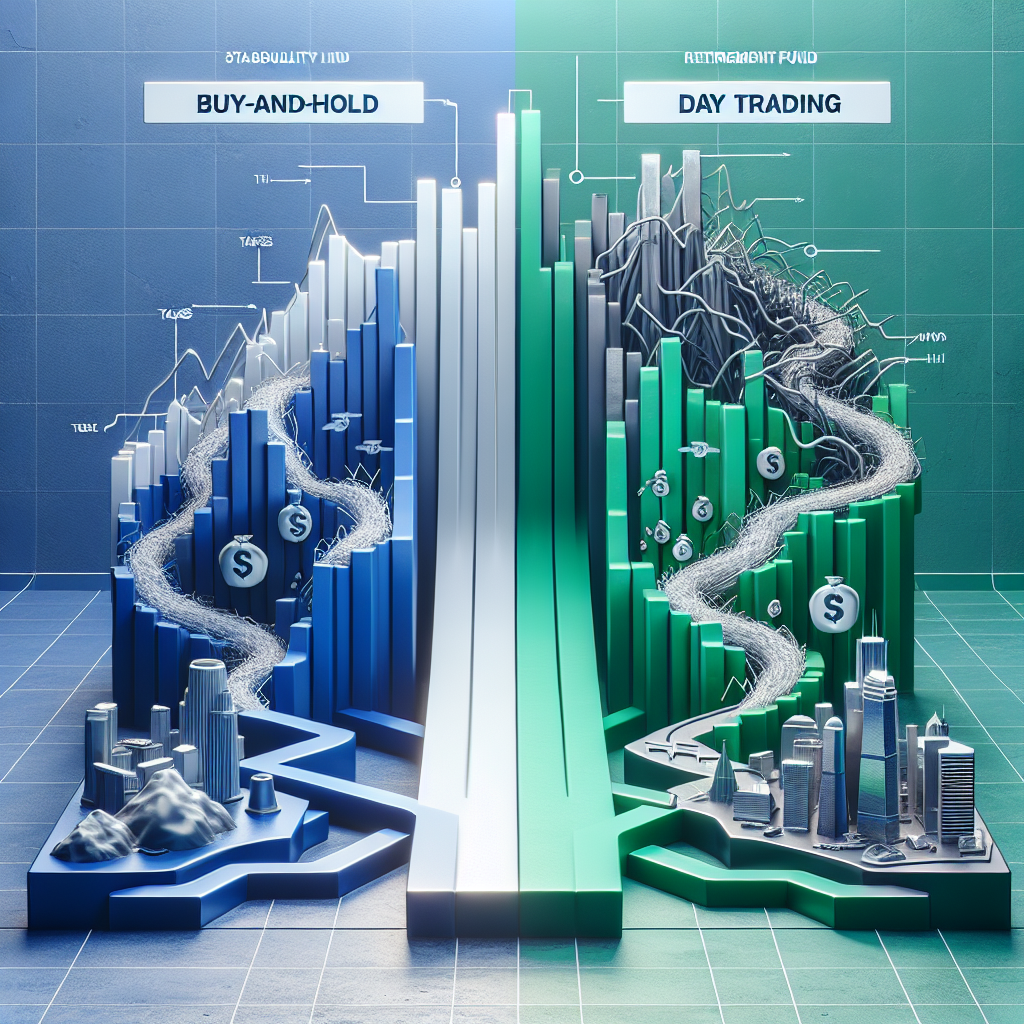
The financial media often blurs the line between investing and speculation. Investing, by definition, is the methodical allocation of capital to assets expected to generate reasonable returns over years or decades. Speculation (e.g., Day Trading) is the attempt to profit from short-term market inefficiencies or price movements, typically over a single day.
For the vast majority of individuals seeking financial independence, this is not a choice between two equally viable paths. It is a choice between a reliable, proven wealth strategy (Buy-and-Hold) and a high-risk, low-probability gamble (Day Trading).
As an RIA, I adhere to the evidence: successful long-term wealth is built on compounding, not trading commissions.
Why Time in the Market Beats Timing the Market
This is the central tenet of modern financial planning and directly counters the philosophy of day trading.
Day Trading’s Core Assumption: The belief that an individual can consistently predict short-term market movements better than professional institutions and algorithms—a feat known as timing the market.
The Buy-and-Hold Principle: Relies on the certainty of compound returns over a long period—a strategy known as time in the market.
The Cost of Missing the Best Days
Historical data proves that a significant portion of the stock market’s annual return is concentrated in just a handful of days. If you miss those days because you were actively trading (and on the sidelines or in cash), your long-term returns are severely impaired.
- Fidelity Study Data: Missing just the best 10 trading days in the S&P 500 over a 20-year period could cut your total returns by more than half.
Day traders, by definition, are highly susceptible to being out of the market during these critical, high-return days. The goal of a fiduciary advisor is to ensure the client is always present to capture all returns.
The Financial and Psychological Drawbacks of Day Trading
While the allure of quick gains is powerful, the practical realities of day trading make it a self-defeating strategy for wealth accumulation.
1. Transaction Costs and Taxes
- High Costs: Although brokerage commissions are now often zero, the bid-ask spread still imposes a cost. Frequent trading generates massive amounts of taxable events.
- Short-Term Capital Gains Tax: All profits generated by day trading are subject to short-term capital gains tax, which is taxed at your higher ordinary income tax rate (up to 37%). This is a punitive tax drag that destroys potential profit.
2. The Emotional Tax (Behavioral Biases)
Day trading amplifies destructive behavioral biases:
- Loss Aversion: Quick, visible losses lead to panic selling.
- FOMO: The constant need to be in the market drives speculative, high-risk entry points.
- Stress and Time: The effort required to monitor markets constantly removes time and focus from one’s primary profession (the actual source of wealth).
3. The Pattern Day Trader Rule
Regulatory burdens exist: The FINRA Pattern Day Trader (PDT) Rule requires a minimum of $25,000 in a brokerage account to execute more than three day trades in a five-business-day period, imposing a large barrier to entry and liquidity constraint.
The Pillars of the Buy-and-Hold Strategy
The buy-and-hold strategy, which is the cornerstone of fiduciary advice, is built on maximizing three simple, reliable forces:
| Pillar | Mechanism | Advantage |
| 1. Compounding | Investment returns generate new returns, which generate new returns, exponentially increasing wealth over time. | Maximizes the time horizon for growth. |
| 2. Low Taxes | Holding assets for over one year qualifies for the preferred long-term capital gains tax rate (0%, 15%, or 20%). | Maximizes after-tax returns and tax efficiency. |
| 3. Low Costs | Utilizing low-cost index funds and minimal trading minimizes fees and slippage. | Ensures less of your return is lost to fund managers and brokers. |
The Strategy for Financial Independence
Day trading is not a wealth accumulation strategy; it is a specialized, high-stress profession with a high failure rate. For the vast majority of investors, the evidence is overwhelming: successful wealth is achieved by utilizing the low-cost, low-tax, Buy-and-Hold strategy. By embracing compounding and time in the market, you align your strategy with the proven mechanics of long-term economic growth, rather than battling against random, short-term volatility.
Trust the long game. Focus on your savings rate and let compounding do the heavy lifting.
Written by Elijah Finn, RIA.
⚠️ Financial Disclaimer & Advertising Disclosure
This article is for informational and educational purposes only. The content provided by Elijah Finn, RIA, does not constitute personalized financial, tax, or investment advice. Always consult with a qualified professional.
Advertising Disclosure: Core Capital Report uses Google AdSense to place advertising on this website. The presence of any advertisement does not imply endorsement of the advertised product or service by Core Capital Report.

Elijah Finn is a Registered Investment Advisor (RIA) and the Principal Analyst for Core Capital Report. With eight years of experience as a Portfolio Analyst at Morgan Stanley Wealth Management, Elijah specializes in translating complex financial strategies into clear, actionable advice for high-net-worth and middle-market clients. He holds an MBA in Finance from the University of Chicago Booth School of Business and maintains his Series 65 certification, adhering to a strict fiduciary standard in all analyses. His work focuses on maximizing long-term wealth through rigorous due diligence on investment vehicles, high-value credit cards, and robust insurance policies.