
Analysis by Elijah Finn, Registered Investment Advisor (RIA) & Principal Analyst, Core Capital Report.
Your Financial Foundation is Not an Investment
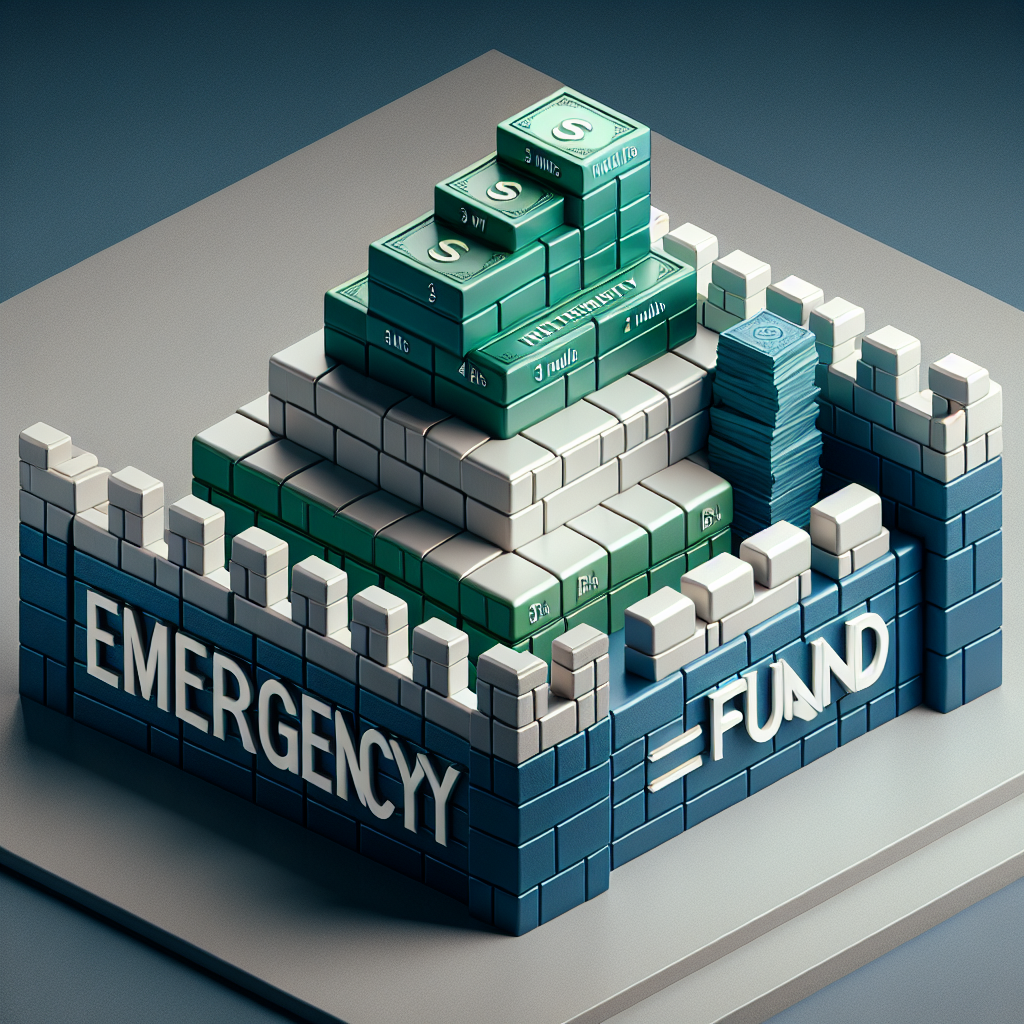
Before a single dollar is allocated to a brokerage account, a 401(k), or real estate, your primary financial goal must be establishing a fully funded Emergency Fund. This capital is your financial armor, designed to absorb unexpected shocks without forcing you to sell investments at a loss, incur high-interest debt, or violate your long-term retirement strategy.
As an RIA, I stress that an emergency fund is not about making money; it is about risk mitigation and capital preservation. Its purpose is security, not growth. The core question is: how much cash is enough to sustain your financial stability?
The Calculation: Defining Your Monthly “Survival” Expenses
The first step in building your fund is accurately defining your monthly needs, which I call “Survival Expenses.” This is not your total budget; it is the absolute minimum required to keep your life functioning.
$$\text{Monthly Survival Expenses} = \text{Housing} + \text{Utilities} + \text{Food} + \text{Insurance} + \text{Minimum Debt Payments}$$
- What to Include: Mortgage/Rent, mandatory utilities (power, water, internet), groceries, health insurance premiums, and minimum required debt payments (credit cards, loans).
- What to Exclude: Discretionary spending, non-essential subscriptions, dining out, and non-essential travel.
Once you have this number, the final size of your emergency fund is simply:
$$\text{Emergency Fund Goal} = \text{Monthly Survival Expenses} \times \text{Number of Months}$$
The Fiduciary Checklist: How Many Months Do You Need?
The ideal size of your fund depends entirely on your personal risk profile and job stability. A standard 6-month fund is a good default, but several factors may push your requirement to the 9 or 12-month level.
When 3–6 Months is Sufficient
A 3 to 6-month buffer is typically appropriate if you have high job security and low financial complexity.
| Risk Factor | Description |
| High Job Security | Employed in a high-demand industry (e.g., healthcare, tech, government) with a stable employer and low risk of layoffs. |
| Dual Income Household | Both partners have stable, high-demand incomes. The loss of one income is partially mitigated by the other. |
| No Significant Debt | Debt is low, or limited to a manageable mortgage. Low debt burden translates to lower monthly “Survival Expenses.” |
When 9–12+ Months is Required
A 9 to 12-month or greater buffer is mandatory if you face higher volatility or structural expenses that take longer to resolve.
| Risk Factor | Description |
| Single Income Household | You are the sole earner supporting dependents. The financial shock is total upon job loss. |
| Variable Income/Self-Employed | Freelancers, small business owners, or commission-based sales professionals. Income is volatile, and recovery time is unpredictable. |
| High Fixed Expenses | High mortgage payments, or a unique dependency (e.g., specialized medical care for a family member) that cannot be cut. |
| Industry Volatility | Employed in cyclical or recession-sensitive sectors (e.g., automotive, oil and gas, hospitality). |
| Geographic Mobility | You live in an area with a high cost of living (HCOL) or an area with a limited job market for your specialized field. |
Finn’s Analysis: “For the self-employed or those in highly volatile industries, I often recommend up to 18 months. The liquidity protects your business and your household from having to take on high-interest debt during a downturn.”
Implementation: Where to Store Your Emergency Fund
The location of your emergency fund is critical. It must be liquid (easily accessible) and safe (no risk of principal loss).
1. High-Yield Savings Accounts (HYSA)
- Safety: FDIC insured up to $250,000.
- Liquidity: Immediate access (24-48 hours transfer time).
- Return: Provides a modest return that often tracks the Federal Funds Rate, mitigating loss to inflation. This is the preferred home for most investors.
2. U.S. Treasury Bills (T-Bills)
- Safety: Backed by the full faith and credit of the U.S. government; considered risk-free.
- Tax Advantage: Interest is exempt from state and local taxes, a significant benefit for high-tax states.
- Use: Suitable for the excess portion of a very large emergency fund (e.g., above the 12-month mark).
⚠️ Risks to Avoid:
- The Stock Market: Never invest emergency funds in stocks or ETFs. Any principal loss defeats the entire purpose of the fund.
- Certificates of Deposit (CDs): CDs lock up your money, often with penalties for early withdrawal, compromising the liquidity requirement.
Conclusion: The True Cost of Financial Security
The emergency fund is the essential bridge between stability and financial disaster. It allows you to approach life’s inevitable setbacks—a job loss, a medical bill, a home repair—from a position of strength, not desperation. By correctly sizing your fund based on your personal risk profile and storing it safely in a high-yield, liquid account, you fortify the entire structure of your wealth-building plan.
Don’t start investing until your emergency fund is fully funded and positioned correctly.
Written by Elijah Finn, RIA.
⚠️ Financial Disclaimer & Advertising Disclosure
This article is for informational and educational purposes only. The content provided by Elijah Finn, RIA, does not constitute personalized financial, tax, or investment advice. Always consult with a qualified professional.
Advertising Disclosure: Core Capital Report uses Google AdSense to place advertising on this website. The presence of any advertisement does not imply endorsement of the advertised product or service by Core Capital Report.

Elijah Finn is a Registered Investment Advisor (RIA) and the Principal Analyst for Core Capital Report. With eight years of experience as a Portfolio Analyst at Morgan Stanley Wealth Management, Elijah specializes in translating complex financial strategies into clear, actionable advice for high-net-worth and middle-market clients. He holds an MBA in Finance from the University of Chicago Booth School of Business and maintains his Series 65 certification, adhering to a strict fiduciary standard in all analyses. His work focuses on maximizing long-term wealth through rigorous due diligence on investment vehicles, high-value credit cards, and robust insurance policies.