
Analysis by Elijah Finn, Registered Investment Advisor (RIA) & Principal Analyst, Core Capital Report.
The Nature of Permanent Life Insurance
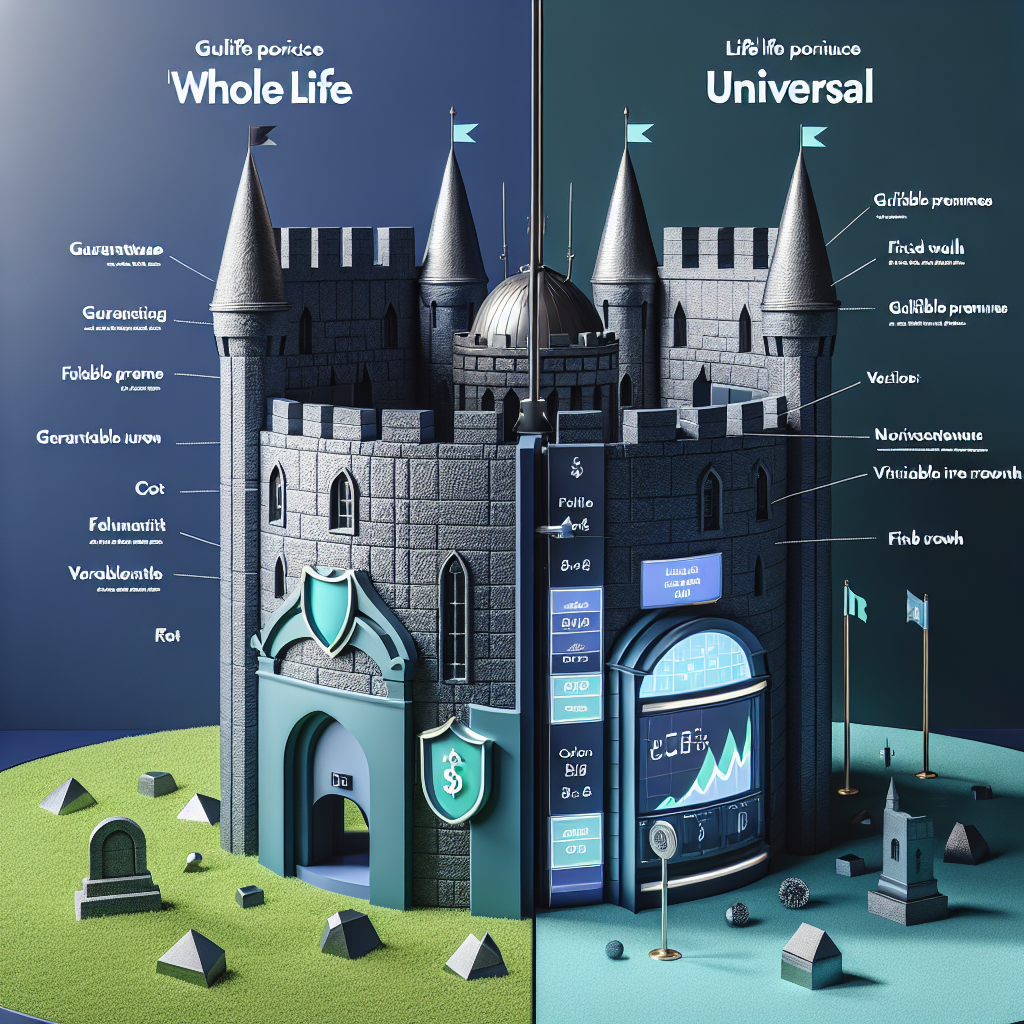
When the need for life insurance extends beyond a set period (i.e., you need coverage for your entire lifetime, often for estate planning or business succession), the discussion shifts from Term Life to Permanent Life Insurance. The two dominant types of permanent insurance are Whole Life (WL) and Universal Life (UL).
Both policies share two core features:
- Lifetime Coverage: The policy remains in force as long as premiums are paid.
- Cash Value Component: A portion of the premium is allocated to a tax-deferred cash value account that grows over time.
However, they differ fundamentally in structure and risk management, which is crucial for determining which fits your long-term wealth strategy.
As an RIA, I emphasize that the primary purpose of life insurance is the death benefit. The cash value component should only be considered after assessing the policy’s structural integrity.
Whole Life Insurance: The Guarantee Standard
Whole Life insurance is the most traditional form of permanent coverage. It is defined by its rigidity and guarantees.
Guaranteed Premiums and Cash Value
The core appeal of Whole Life is its guaranteed structure:
- Fixed Premium: Your premium payment is set at the time of purchase and never changes for the life of the policy. This provides predictability and budgeting certainty.
- Guaranteed Death Benefit: The face amount paid to your beneficiaries is guaranteed, provided premiums are paid.
- Guaranteed Cash Value Growth: The cash value grows at a guaranteed minimum interest rate (e.g., 3-4%), regardless of market conditions. This growth is slow but certain.
Risk Profile: WL is a low-risk, low-flexibility product. You trade control and the potential for higher returns for absolute certainty.
Universal Life Insurance: Flexibility vs. Guarantee
Universal Life insurance was designed to introduce flexibility into the permanent insurance market. It separates the policy into three components: mortality cost, expense cost, and cash value.
Flexibility vs. Guarantee (Variable Premium vs. Fixed)
The defining feature of UL is its flexible premium structure and the associated risk:
| Feature | Whole Life (WL) – Guarantee | Universal Life (UL) – Flexibility |
| Premium Payment | Fixed and Required. Must be paid on time to maintain the guarantee. | Flexible. You can adjust payments within limits, using cash value to cover costs during lean years. |
| Cash Value Growth | Guaranteed Rate. Growth is slow but protected by the insurer. | Variable Rate. Linked to market interest rates or a specific index (IUL/VUL), offering higher potential but carrying greater risk. |
| Policy Risk | Insurer Risk. Risk is primarily that the insurance company fails (unlikely). | Policy Lapse Risk. The primary risk is that high fees/low returns erode the cash value, causing the policy to lapse. |
Policy Lapse Risk: With UL, if your cash value growth is lower than expected and your chosen premium payment is too low, the cash value may be insufficient to cover the policy’s internal costs (mortality and expenses). If the cash value hits zero, the policy lapses, and you lose the death benefit.
Strategic Application: Which Policy is Right?
The choice between WL and UL depends entirely on your financial behavior and risk tolerance.
- Choose Whole Life if:
- Predictability is essential. You require guaranteed premiums and guaranteed cash value growth for meticulous estate planning.
- You are a risk-averse individual who views the cash value component primarily as a protected savings vehicle.
- You require the highest level of stability for a fixed, lifelong liability.
- Choose Universal Life if:
- Budget flexibility is paramount. Your income is variable (e.g., self-employed) and you need the option to lower payments some years.
- You are willing to accept market risk (or interest rate risk) for the potential of higher cash value growth.
- You are comfortable with the active management required to monitor the policy’s internal rate of return versus its internal cost structure.
Prioritize the Death Benefit
While the cash value component of permanent insurance is often marketed as an investment, its primary function is to keep the policy in force. Whole Life offers peace of mind through iron-clad guarantees, while Universal Life offers adaptability at the cost of certainty and requires rigorous monitoring.
For most individuals, the certainty of Whole Life is preferable unless budget constraints absolutely demand the premium flexibility of Universal Life, coupled with the understanding of the lapse risk.
Written by Elijah Finn, RIA.
⚠️ Financial Disclaimer & Advertising Disclosure
This article is for informational and educational purposes only. The content provided by Elijah Finn, RIA, does not constitute personalized financial, tax, or investment advice. Always consult with a qualified professional.
Advertising Disclosure: Core Capital Report uses Google AdSense to place advertising on this website. The presence of any advertisement does not imply endorsement of the advertised product or service by Core Capital Report.

Elijah Finn is a Registered Investment Advisor (RIA) and the Principal Analyst for Core Capital Report. With eight years of experience as a Portfolio Analyst at Morgan Stanley Wealth Management, Elijah specializes in translating complex financial strategies into clear, actionable advice for high-net-worth and middle-market clients. He holds an MBA in Finance from the University of Chicago Booth School of Business and maintains his Series 65 certification, adhering to a strict fiduciary standard in all analyses. His work focuses on maximizing long-term wealth through rigorous due diligence on investment vehicles, high-value credit cards, and robust insurance policies.